


Every designer bag has their day in the sun.
The Chloé Phantom, the Chanel Boy Bag, the Fendi Baguette, the Balenciaga City Bag, the Gucci Marmont. All of these held court for a period of time, ranging from a few months to even a few years, before fading out and finding itself creeping deeper and deeper into the back of fashion blogger-turned-influencer’s closets.
I don’t subscribe to the idea of a “trending” bag. I wear whatever looks good with my outfit. I don’t have disposable income to spend on a $3000 handbag, and any bags I do have are extremely special to me and hold more than just my belongings—they hold sentimental value. A trip to Paris and London with my mom, my 21st birthday, my first sample sale.
While I may not subscribe, it’s clear that it exists. There’s a lot of anti-bag discourse right now that I find interesting. People are questioning the quality of these bags as the prices spike, wondering why the same silhouette two years ago cost $500-1000 less.
There are a few answers—inflation in the cost of materials and manufacturing, Dakota Johnson was photographed wearing it last weekend, Balenciaga skyrockets into the #1 brand seed, the internet is doing a mass Sex and the City rewatch, etc.
One of the biggest victims of this inflation is the Hermès Birkin.
If you don’t know what a Birkin is, it’s a top-handle leather bag from the French couture house Hermès. It is only available via appointment with an Hermès salesperson that you’ve fostered a relationship with—at least, it used to be—and ranges anywhere from $10,000 to $500,000 depending on the rarity of the leather (cow to ostrich), the size, and the quantity produced. The name pays homage to Jane Birkin, who was the muse for Hermès to create the bag and was given the first iteration ever, which recently sold at auction for $10.1M.


Women of a certain ilk used to spend their entire privileged, adult lives trying to get a Birkin. I remember when on the Real Housewives of Beverly Hills, other women keeled over in power every time Kyle Richards walked into the room with a Birkin on her arm. I remember when Kanye gifted Kim a Birkin that North had drawn all over for her birthday, and I remember when Kim got kancelled for posting her Birkin that was made of elephant skin.


Birkins were selective. They were extremely difficult to acquire, at the mercy of a salesperson to decide whether or not you’re worthy enough to be in this exclusive club of bag-holders. Once you got one, it was a symbol that you could afford to carry $25,000 on your wrist. Your kids were in college and successful, your house was paid for, your car, your vacations. Now, it was time to get a little obnoxious.
I first started to notice the downfall of the Birkin when Walmart made a knockoff. In fashion school, we were taught that knockoffs did not put a brand in danger because they did not share the same customer as the knockoff, therefore the segment wasn’t being cannibalized. People who could actually afford a Louis Vuitton Speedy were who Louis Vuitton were after, not the people who wanted a fake one. However, a trending knockoff does indicate that your bag is becoming mainstream, something that the masses want the look and feel of, not just the upper echelon.
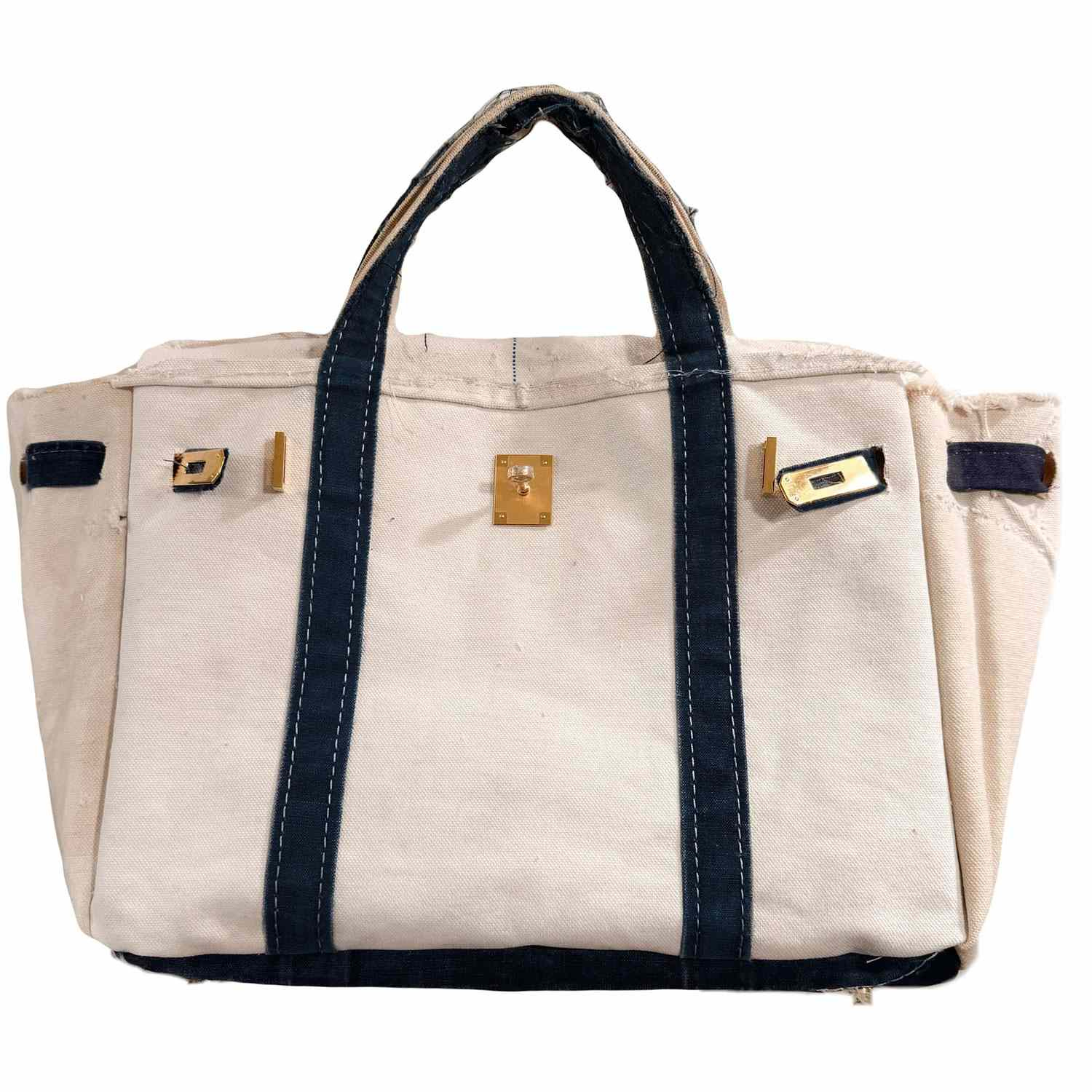
Then came the “Boatkin”—the bastard child of the L.L. Bean Boat Tote and the Birkin—a bag that went viral on Etsy and soon boutiques like Zitomers. It had similar hardware and the shape as a Birkin, but was made of canvas. I actually find these to be pretty adorable, but nonetheless, a sign of the times.
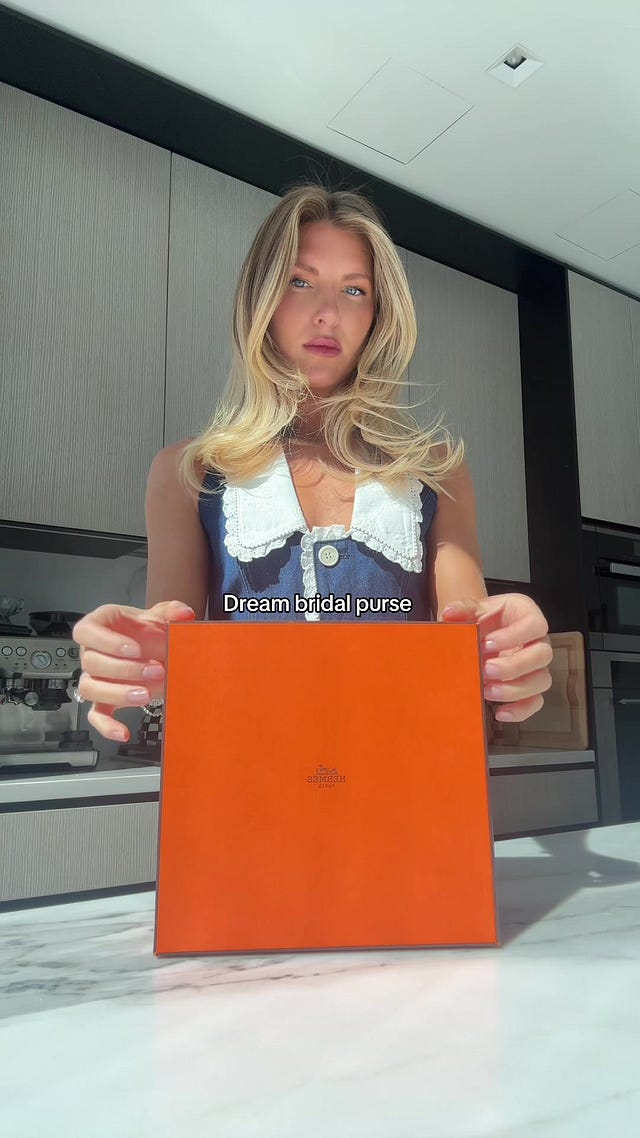
Around this time, TikToks from influencers talking about getting a leather appointment at Hermès in Paris began to spike, women making three part series to unbox their first bags for all the world to see. They boasted about getting in at the end of the day regardless of their purchase history, three, four, five girls leaving Paris Fashion Week at a time with a beautiful orange box.
This was confusing to me. I didn’t understand why the birthplace of the Birkin would just be handing these things out. It’s not like they wanted to acquire a younger customer or more sales—Hermès spoke for themselves. They don’t chase, they attract.
Recently, it’s become abundantly clear that people are buying them from authorized third parties and pretending like they’re from Hermès. Or not even pretending, in the case of Rob Rausch for Maura Higgins, who got his from Madison Avenue Couture.
People are buying them in Paris and going straight to the store to sell it to someone who will buy it for more, and then sell it again to an American who wasn’t lucky enough to get a leather appointment. Influencers are pulling Rob Rausches or going straight for vintage, pretending like it’s on purpose.
 Tiktok failed to load.
Enable 3rd party cookies or use another browser
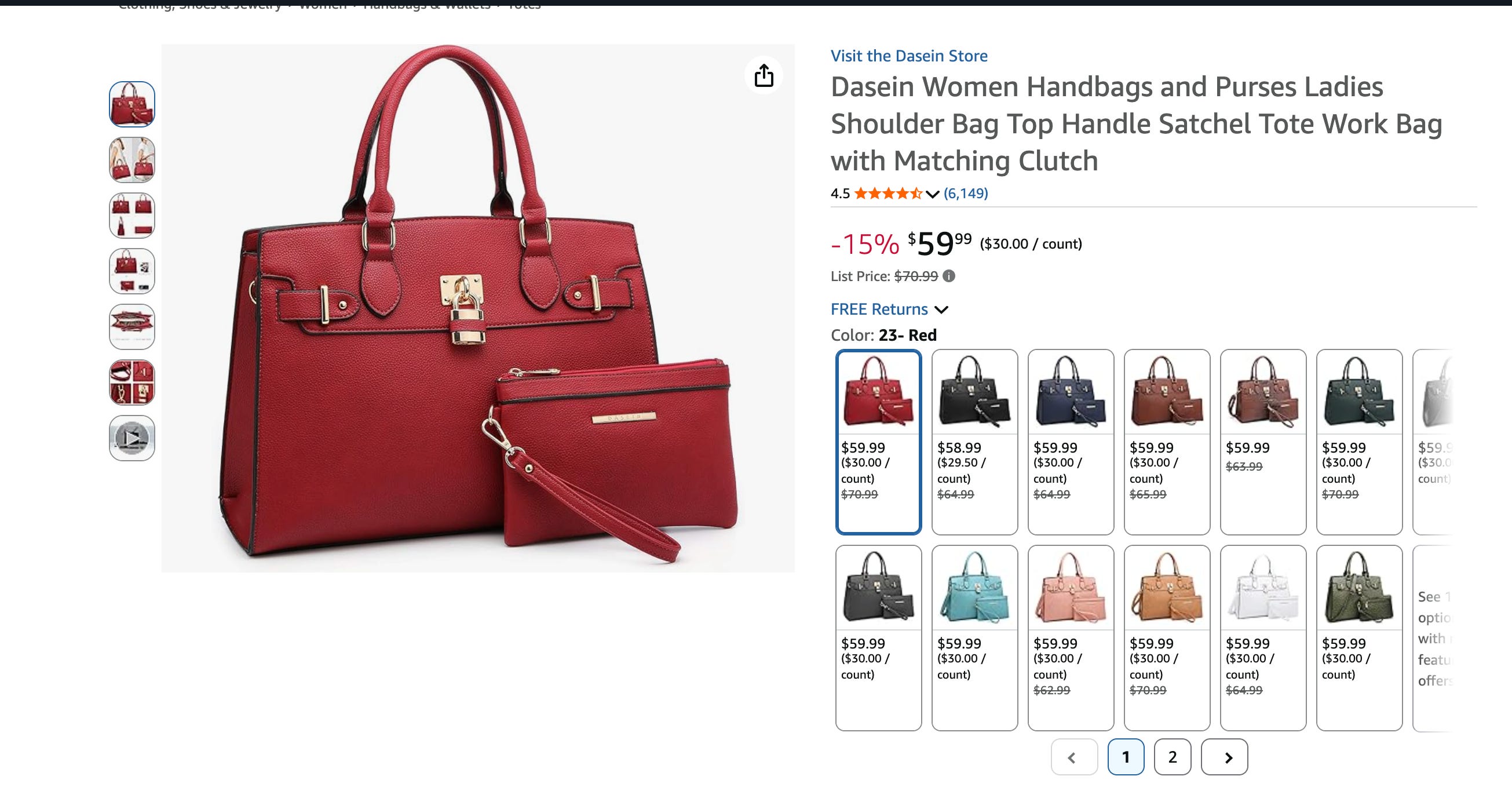
I’m here to official label the Birkin as lame. Now that everyone and their influencer friend has one, the allure is completely gone, dissipated into thin air with all it-bags before it. It hurts my eyes to look at now, and each one I see has me wondering if it was bought with integrity or through a shortcut. The shape is completely oversaturated, ranging from Amazon to J.W. Pei and beyond.
I don’t know who made me the authority on what’s cool and what’s not, but I can pretend like I have it. If you want to spend $10,000 on something—which I’m nearly certain none of my readers do—you should buy some jewelry like a tennis necklace or a custom encrusted pendant from the diamond district. Go to Portofino or Kyoto or Rio De Janeiro. Buy an apartment, I don’t know.
If you do want to know what bags I think are cool right now, I would probably say something cool and inconspicuous like the Celine Triomphe. Though no bags are really tickling my fancy right now.
I never thought of the Birkin as something that was capable of falling from status. Though I’m sure everyone thought the same about Ellen DeGeneres or Lehman Brothers.
This had to be done ! Fabulous
FYI, I definitely consider you an authority on what's cool and I really want a boatkin now!