


I think that I’m becoming an Elizabeth Holmes apologist.
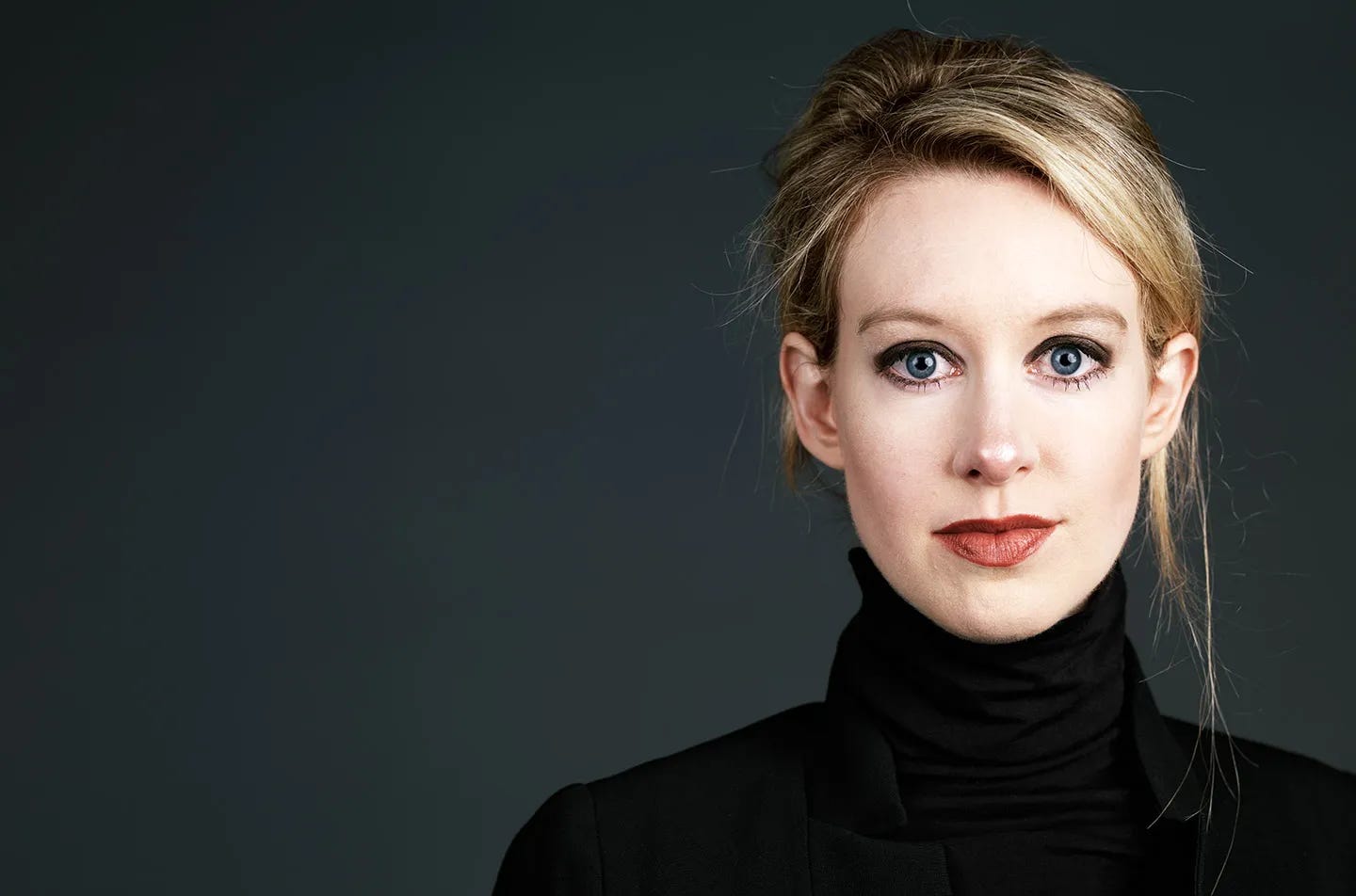
YES. The fraud. The FRAUDDDDD. I know. I understand that defrauding investors and abusing the vulnerability of countless victims is something that absolutely should be punished. But should we punish the drive of female founders, racing against the unavoidable obstacles put in front of them from inception on?
When I first explained Sunday Hangover, I pointed out that these may be a bit more rough around the edges than the standard Coffee Order, this is a great example of what I meant. Expressing my empathy for a convicted fraudster.
To those who are unaware of Elizabeth Holmes and the Theranos story, I’ll do my best to give a quick synopsis. Elizabeth Holmes dropped out of Stanford at 19 to start a biotech company, Theranos. Her goal was to revolutionize blood-testing, to go from countless intravenous vials for a single test, to one prick of the finger for a wide range of diagnoses, such as sepsis, cancer, and beyond.
Over the years past inception, Theranos and Elizabeth herself quickly found themselves overpromising and defrauding investors to believe in technology that simply never worked. It all caught up to them in the beginning of 2022, when Liz (no one calls her that) was convicted of fraud, and is now awaiting sentencing.
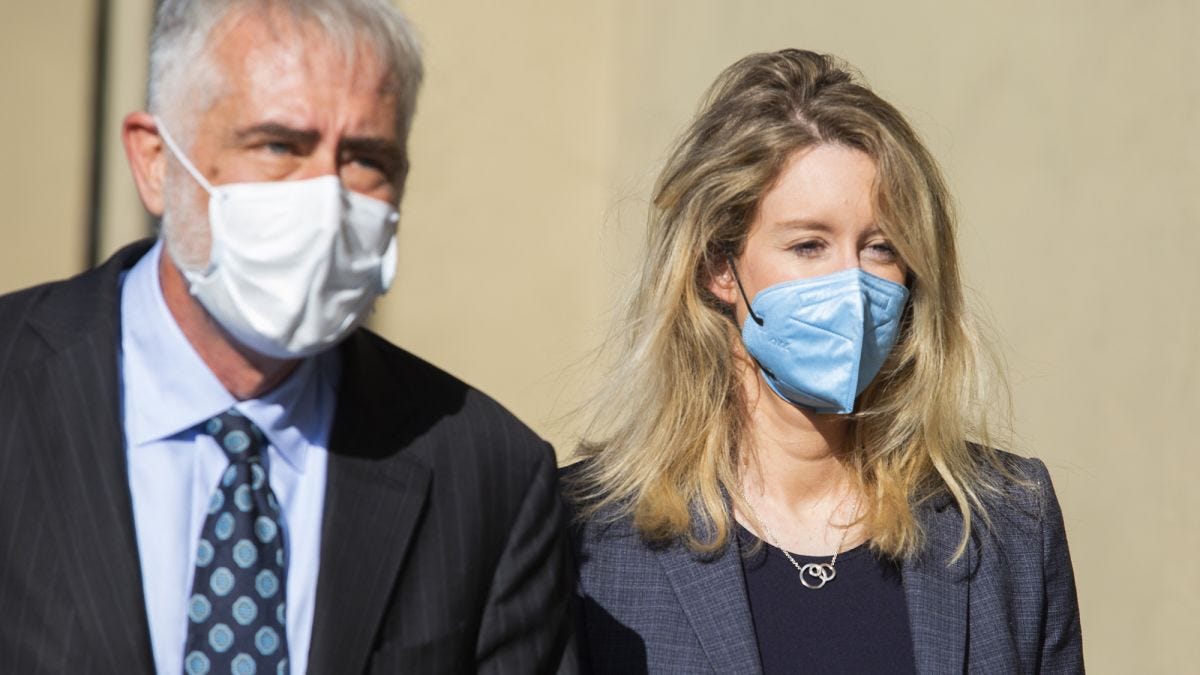
If you’ve been binging the Hulu show The Dropout, or watched the documentary The Inventor on HBO, or listened to the podcast series of the same Hulu namesake, or all of the above like myself, then you can relate to having an abundance of meaningless opinions on this story.
One of my favorite influencers, Tinx, aka Christina Najjar, recently reflected on watching The Dropout from the shared point of view as Elizabeth as a former Stanford student on her podcast (episode linked below).
Something of note that Tinx brought up in this was the founder culture that surrounded Stanford post-Zuckerberg, and does even to this day. Looking from the outside (art school) in, it seems as though students within Silicon Valley proximity are pushed and pushed to become the next big thing, sometimes being pushed too far to the point of fraud (i.e., Liz).
Female founders specifically are taken less seriously. That is a fact. If I walked into a venture capitalist board room with an idea that would blow the pants off of Elon Musk himself, dressed in a fantastic pantsuit with articulation that puts the majority of my peers to shame, the odds of the board I’m pitching to picking my idea over a sub-par project by a prep-school boy who grew up down the street from me are significantly lower.
This is why I feel bad for Elizabeth Holmes.
I can understand the founder culture, believe it or not, going to SCAD. Many alumni found their own companies or businesses, many of them local to Savannah, many of them successful and newsworthy such as Christopher John Rogers, Eny Lee Parker, and more that utilized their craft to create a business by the straps of their boots.
While none of my peers plan on creating another Metaverse anytime soon, I’m sure a lot of them, like myself, have aspirations of starting their own companies. A lot of us have ideas that we nurture like a child, voracious to be someone who could grace the cover of Forbes, proving to their doubters that they did in fact create something big and successful.
19-year-old Elizabeth Holmes was just a girl with a dream to be the next Steve Jobs. She didn’t have dreams of defrauding venture capitalists and creating something that didn’t work, and I could only hope to God that she didn’t have dreams of dating a 37-year-old Sunny Balwani when she went on that trip to Beijing.
Hurting innocent victims is where I have an Erika Jayne (formerly Girardi) type of inner conflict. I think this is why we all forgave Aunt Becky so quickly. The only people she defrauded alongside Mossimo (a la Target) was USC. To whom, no offense to my friend Taylor (who is currently in her eleventh hour as a student there) I don’t feel too bad for.
When there are widows or orphans or cancer patients or just a regular Walgreens shopper involved, I start to feel less bad for the defendant, as you can assume.
I pride myself as an empath. Sometimes that gets in the way, like when I start tearing up at my local bagel place because I see an elderly man in a fedora sitting by himself, or when I see a video on TikTok of an ill child and that’s the only thing in my mind for the rest of the day despite having oodles of homework to do. But a lot of the time, being an empath is one of my more charming personality traits.
I empathize with Elizabeth greatly. I feel badly that she obviously had internal issues and outside forces that caused her to eventually push herself beyond honesty and integrity. I feel badly that older, more seemingly successful men than her, i.e. Sunny, often pushed her to the brink of catastrophe. That investors wouldn’t listen in the beginning because she was in the college girl age bracket. That all she wanted to do was create something great, something that would save the world in a way.
It’s one of those things that’s super unfortunate. A huge bummer. Honestly, I don’t really care that she defrauded Walgreens, they’ve always been the inferior pharmacy to CVS (episode 4 of The Dropout).
What I hope is that the victims who were told they might have sepsis because of a faulty Edison machine get their day in court, that Ian Gibbons’ widow gets to make Elizabeth eat crow for what she did to her husband, and that Elizabeth and her hotel heir husband live a long, happy life, without filing any more patents.
Happy Sunday Hangover! Order a Chipotle burrito, get in bed, and please watch The Dropout on Hulu so I have someone to discuss it with.
If you love me, you’ll send this to your friends for them to read and subscribe. I’ll be waiting!
Amazing